MALTE WOYDT

HOME:    PRIVATHOME:    LESE- UND NOTIZBUCH

ANGE
BOTE
BEL
GIEN
ÜBER
MICH
FRA
GEN
LESE
BUCH
GALE
RIE
PAM
PHLETE
SCHAER
BEEK
GENEA
LOGIE

Pénuries de main-d’œuvre

“Dans un domaine au moins, il n’y a pas de pénurie, celui des inquiétudes sur les pénuries. C’est a priori étonnant : les files devant les magasins, voilà une image associée aux économies planifiées. Dans une économie de marché, le prix s’ajuste pour équilibrer l’offre et la demande. Une pénurie ne peut y être que temporaire : … la pénurie devrait s’auto-corriger par une augmentation du salaire.

C’est le b.a.-ba du libéralisme économique, et laisser ce mécanisme opérer devrait être pour ses partisans une question de cohérence intellectuelle. Or, aujourd’hui, nous devons constater un double phénomène, particulièrement prononcé en Belgique : les pénuries de main-d’œuvre semblent être un problème permanent majeur pour bon nombre d’employeurs et les salaires réels dans les métiers concernés n’augmentent guère.

C’est toujours surprenant quand ceux qui détiennent les clefs de la solution se plaignent d’un problème ! S’il y a un manque de maçons ou d’infirmiers, c’est aux employeurs de rendre ces métiers plus attractifs … Et soigner l’attractivité peut signifier augmenter les salaires, mais c’est … aussi rendre le travail moins lourd pour la santé, plus aisément compatible avec la vie privée, plus ouvert aux formations et aux évolutions de carrière et plus stimulant car plus responsabilisant et plus polyvalent. …”

aus: Étienne de Callataÿ: Bonne nouvelle : il y a des pénuries de main-d’œuvre, La Libre Belgique en ligne, 19.11.21, im Internet

11/21

21/11/2021 (13:51) Schlagworte: FR,Lesebuch ::

Spaltung

“Mit maximaler Durchlässigkeit an der Blödsinnsflanke ist niemandem geholfen. Was es jetzt braucht, ist nicht mehr Offenheit, sondern ein scharfer Keil. Einer, der die Gesellschaft spaltet. Wenn davon die Rede ist, entsteht schnell ein Zerrbild im Kopf, als würde das Land in zwei gleich große Teile zerfallen. Doch so ist es nicht. Richtig und tief eingeschlagen, trennt er den gefährlichen vom gefährdeten Teil der Gesellschaft.

Sicher, es ist nicht ganz leicht, den Spaltpunkt exakt zu treffen. Liegt er zu weit außerhalb, können die Extreme weiter wachsen. Liegt er zu weit innerhalb, gehen legitime kritische Stimmen verloren. Man wird diese Grenze immer wieder neu austarieren müssen. Ein Anfang wäre ja schon, alles nicht faktenbasierte, unwissenschaftliche und staatsfeindliche auszuschließen. Falschbehauptungen sind keine Meinung, Hetze ist keine berechtigte Sorge. Wer das nicht begreift, gehört auf die andere Seite. Dann ist Spaltung nicht das Problem, sondern Teil einer Lösung. Denn nur wenn Ruhe ist vor diesem Geschrei, lässt sich geduldig reden mit denen, die nah an der Kante stehen.”

aus: Christian Vooren: Die Gesellschaft muss sich spalten! ZEIT-Online 19.11.21, im Internet

11/21

20/11/2021 (0:36) Schlagworte: DE,Lesebuch ::

Corruption 2

“All that is required for a corruption-friendly ecosystem to prosper is for those in power to have such a strong mandate that they can start assailing political norms without fear of punishment.

There is an Arabic expression that warns against the perils of an abundance of wealth: ‘Loose money teaches theft.’ Britain has the dubious honour of being the home of the loose money of the global rich, facilitating its movement through secret offshore companies, setting up entirely legal means to profit from these opaque transactions.

Taking liberties in office tends to work the same way. Loose power teaches corruption … That loose power broadly requires three further conditions to trigger misconduct – a craven or cowed press, a lack of what is seen as a viable political alternative and a large section of the public made quiescent, either through apathy or tribalism. Sound familiar?

Welcome to the global community of those living under corrupt governance. The good news is that you are not alone. The bad news is that, once corruption starts to set in, it becomes very hard to reverse. It becomes (this will also sound familiar to you), ‘priced in’ to people’s expectations of the political class, even institutionalised.

People in those other countries – the ones you more easily associate with corruption than your own – will explain the subtle evolution: what was before a furtive cash bribe that you needed to pay for a government stamp becomes an official fee that you are handed a nice crisp receipt for. What was before an outrageous grab of power from a democratically elected government becomes a legal process blessed by an election …

The unprincipled will not be shunned but enriched and honoured. The press will contradict what you have seen with your own eyes. Conspiracy theories will begin to flourish because everyone is in the business of making up narratives, so the truth becomes a matter of spinning and selling the most convincing lie. … It will begin to exhaust your sense of outrage and warp your sense of right and wrong.

Eventually what will begin to settle is a sense that you as an individual have no control, no matter how many freedoms – voting, protesting – you feel you can exercise. Those rights will feel like levers that aren’t connected to anything. And so you give up. The main political emotion I grew up with in the Middle East and north Africa was not that of suffering oppression, but of jaundice – a sort of cultivated cynicism that protected us against the despair of life under regimes that stole from us and then remade the rules in their favour.

I have felt this creeping up on me in the UK. It is an impulse that I recognise in the continuing support for the Conservatives, or the tepid resistance to them despite their proven malpractice, their endless scandals, their failure to deliver on what were once considered basic criteria for governments: that the state does everything it can to protect its citizens’ lives in a pandemic, and that most people’s material circumstances get better with time. Once the state withdraws from that role of honest broker and facilitator, the result is a fatalism: we must carry on and make do with what we have. …

Corruption in Britain lives in plain sight; it even follows the rules. We may not be Russia, but we don’t need to be for us to be in trouble. ‘Happy families are all alike; every unhappy family is unhappy in its own way,’ Tolstoy wrote. The same applies elsewhere – every corrupt political system is corrupt in its own way. The end result, the collective unhappiness, is the same though.”

aus: Nesrine Malik: I have lived under corrupt regimes – the cynicism stalking Britain is all too familiar, The Guardian Online, 8.11.21, im Internet

11/21

08/11/2021 (11:12) Schlagworte: EN,Lesebuch ::

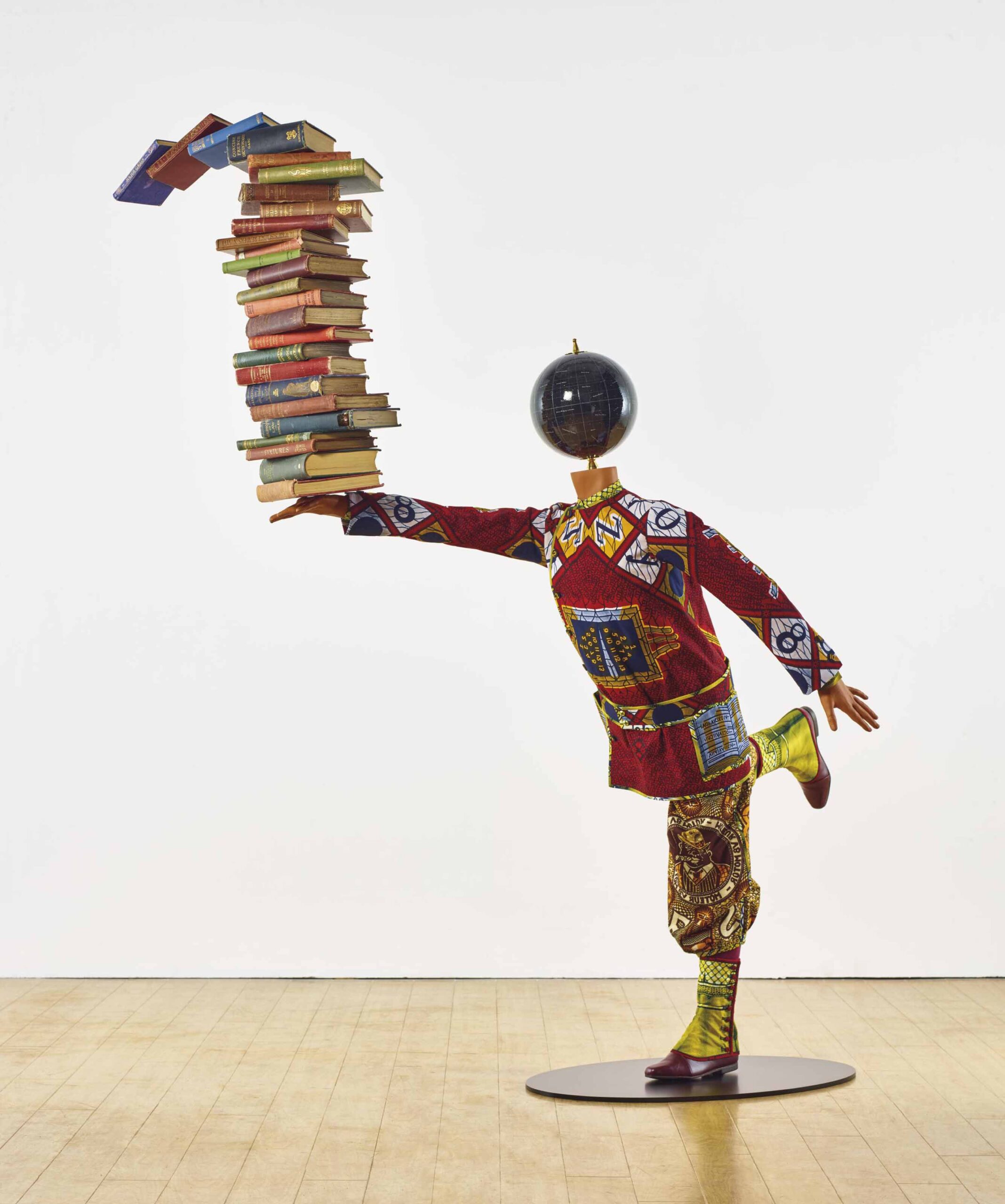
Buchwissen

“Von der Weisheit aber verleihst du deinen Schülern den Schein, nicht die Wahrheit. Denn wenn sie vieles von dir ohne Unterricht gehört haben, so dünken sie sich auch Vielwisser zu sein, da sie doch größtenteils Nichtwisser sind, und sie sind lästig im Umgang, da sie statt Weise Dünkelweise geworden sind.”

aus: Platon: Phaidros oder vom Schönen, zitiert bei Yuk Hui: Die Frage nach der Technik in China. Berlin: Matthes & Seitz 2020, S.94.

Abb.: Asmudjo Jono Irianto: Unoriginal Sin, 2014, Detail, indoartnow, im Internet.

11/21

08/11/2021 (2:40) Schlagworte: DE,Lesebuch ::

Maschinen

“Wenn einer Maschinen benützt, so betreibt er all seine Geschäfte maschinenmäßig; wer seine Geschäfte maschinenmäßig betreibt, der bekommt ein Maschinenherz. Wenn einer aber ein Maschinenherz in der Brust hat, dem geht die reine Einfalt verloren: Bei wem die reine Einfalt hin ist, der wird ungewiß in den Regungen seines Geistes. Ungewißheit in den Regungen des Geistes ist etwas, das sich mit dem wahren Dao nicht verträgt. Nicht, daß ich solche Dinge nicht kennte: ich schäme mich, sie anzuwenden.”

aus: Dschuang  Dsi: Das wahre Buch vom südlichen Blütenland, hier zitiert bei: Yuk Hui: Die Frage nach der Technik in China. Berlin: Matthes & Seitz 2020, S.91/92.

Abb.: Koreanisches Filmposter zu Charlie Chaplin: Modern Times, im Internet.

11/21

08/11/2021 (2:30) Schlagworte: DE,Lesebuch ::

Kaffeehaus

“George Steiner … definiert die europäische Idee anhand von fünf Parametern …: erstens das Kaffeehaus (‘ Solange es Kaffeehäuser gibt, so lange hat die europäische Idee einen Inhalt’) …

Das ist sehr seltsam, denn gerade das Kaffeehaus ist eine durch und durch orientalische Erfindung, ein Import aus Westasien. Und zwar nicht nur das Haus des Kaffeeausschanks, sondern als Ort des Diskutierens, Träumens, Schachspielens und Zeitvertreibens – genauso wie ihn Steiner beschreibt. Ca. 1640 öffnete das erste zentraleuropäische Kaffeehaus in Venedig. Schon vorher gab es allerdings Kaffeehäuser in Mekka um 1500, dann in Kairo, Damaskus, ab etwa 1555 in Istanbul und damit erstmals in Europa, ab etwa 1600 in Qazwin und Isfahan in Iran. Die ‘Kultur des Cafés’ ist noch heute eine derjenigen Institutionen, die europäische, nordafrikanische und westasiatische Länder kulturell miteinander verbindet.”

aus: Dag Nikolaus Hasse: Was ist europäisch? Ditzingen: Reclam 2021, S.67-69.

11/21

04/11/2021 (0:28) Schlagworte: DE,Lesebuch ::

Treibhausgasproduzenten

10/21

31/10/2021 (23:32) Schlagworte: DE,Lesebuch ::

FDP

Privilegierte, die glauben, sie kämen zu kurz”.

aus: Robert Pausch und Bernd Ulrich: Das Leuchten der Ampel, Zeit-Online, 29.9.21, im Internet.

Abb.: FDP-Wahlplakat 2013, im Internet.

09/21

29/09/2021 (15:06) Schlagworte: DE,Lesebuch ::

Britain 2

“… At the age of 13, after prep school, Cameron and Johnson progressed to Eton. I went on to Radley College near Oxford. The exact school picked out by the parents didn’t really matter, because the experience was designed to produce a shared mindset. They were paying for a similar upbringing with a similar intended result: to establish our credentials for the top jobs in the country. …

It is noticeable, and often noticed, that something immature and boyish survives in men like Cameron and Johnson as adults. They can never quite carry off the role of grownup, or shake a suspicion that they remain fans of escapades without consequences. They look confident of not being caught, or not being punished if they are. …

One of the first things we learned – or felt – at prep school was a deep, emotional austerity, starting from the moment the parents drove away. … We lost everything – parents, pets, toys, younger siblings – and we could cry if we liked but no one would help us. So that later in life, when we saw other people cry, we felt no great need to go to their aid. The sad and the weak were wrong to show their distress, and we learned to despise the children who blubbed for their mummies. The cure was to stop crying and forget that life beyond the dormitories and classrooms existed. Concentrate instead on the games pitches and the dining hall and the headmaster’s study. By force of will, we made ourselves complicit in a collective narrowing of vision. …

This wasn’t healthy. In her 2015 book, Boarding School Syndrome, psychoanalyst Joy Schaverien describes a condition now sufficiently recognised to merit therapy groups and an emergent academic literature. The symptoms are wide-ranging but include, ingrained from an early age, emotional detachment and dissociation, cynicism, exceptionalism, defensive arrogance, offensive arrogance, cliquism, compartmentalisation, guilt, grief, denial, strategic emotional misdirection and stiff-lipped stoicism. …

We adapted to survive. We postured and lied, whatever it took. Abandoned, alone, England’s future leaders needed to fit in whatever the cost, and we were not needy, no sir. We could live without, and we convinced ourselves early that we had no great need of love, in either direction. Acting like a grownup meant needing no one.

Discouraged from crying out for help, frightened of complaining or sneaking, we developed a gangster loyalty to self-contained cliques, scared to death of being cast out as we had been from home. …

From the teachers, we learned about mockery and sarcasm as techniques for social control … George Orwell, during his time at prep school, remembers being ridiculed out of an interest in butterflies. The banter that day must have been immense. Nothing was sacred, and once we found out what another boy took most seriously we were ready to strike, when necessary, at its core. Our most effective defence was therefore to act as if we took nothing very seriously at all. We learned to stay detached …

At school, we tried not to feel foolish, angry, loving, stupid, sad, dependent, excited or demanding. We were made wary of feeling, full stop. By comparison, children not blessed with a private education must be fizzing with uncontrolled emotions and therefore insufferably weak. … – in the documentary Public School the boys casually refer to ‘the lower orders’, as if to a species difference, reptiles considering insects. In our isolation, we learned that we were special. Everyone else was less special and often stupid – school was where we went, aged eight, to learn to despise other people. … As Orwell doubles-down in Nineteen Eighty-Four: ‘The proles are not human beings.’ … We laughed at anyone not like us … later making us insensitive as witnesses to all but the most vicious instances of discrimination. Everyone who was not us, a boy at a private boarding school from the late 70s to the early 80s, was beneath us. …

In earlier generations, Orwell and others like him were exposed by war and other calamities to a seriousness that grew their stunted selves and tempered the isolated and ironic cult of an English private education. They were goaded by events into compassion, so that sooner or later, Orwell believed, even in ‘a land of snobbery and privilege, ruled largely by the old and silly’, England would brush aside the obvious injustice of the public schools.

The wait goes on. …”

aus: Richard Beard: Why public schoolboys like me and Boris Johnson aren’t fit to run our country. The Guardian Online, 8.8.21, im Internet.

08/21

08/08/2021 (18:18) Schlagworte: EN,Lesebuch ::

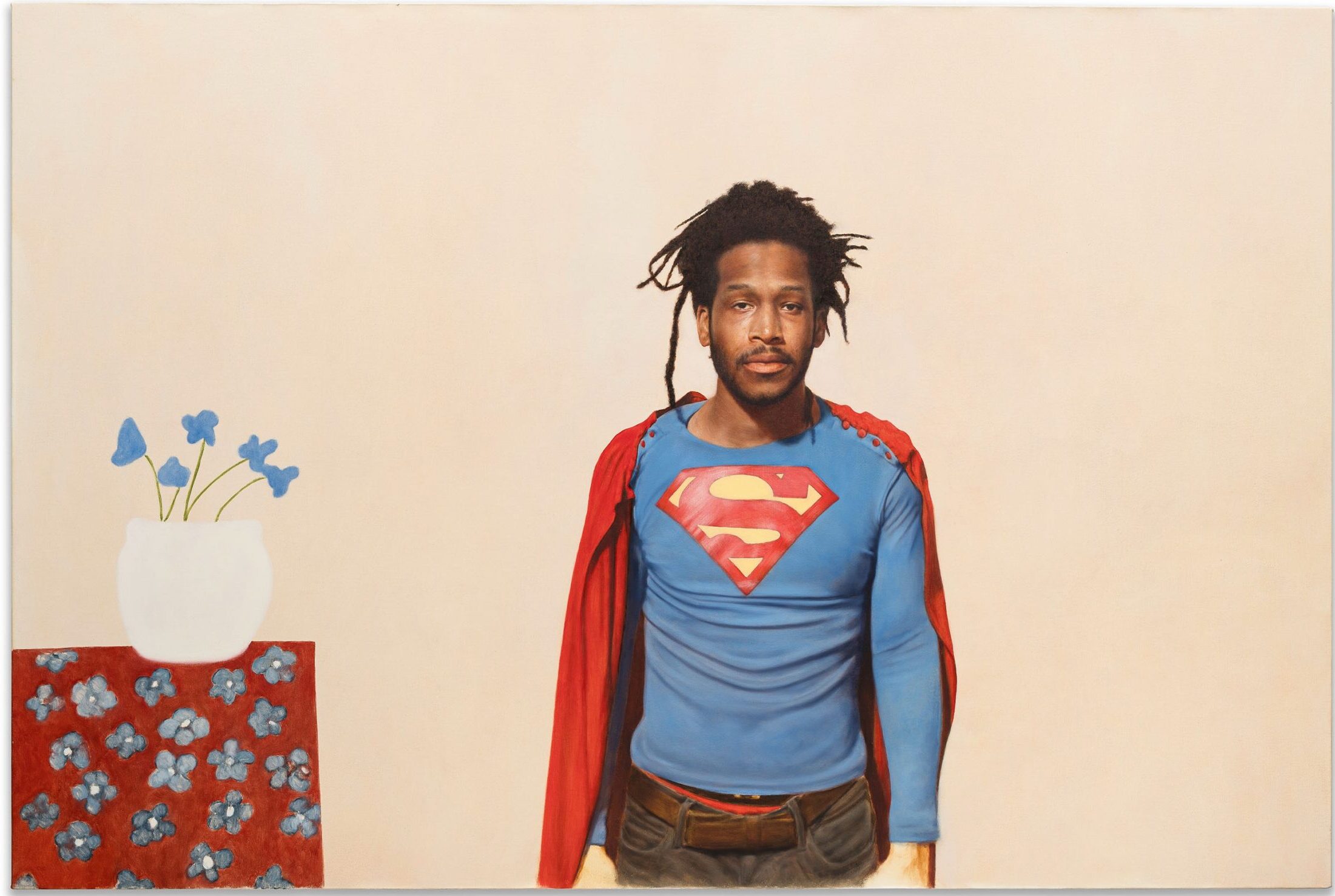
Asian Values

“Last year, ‘Asian values’ became the one-stop explanation for the success of countries such as China, South Korea, Japan, Taiwan, Singapore and Vietnam in controlling the virus. The west, many insisted, had paid for its individualist ethos by having populations refuse to obey the authorities, fail to wear masks or observe lockdowns.

Except that it has not quite turned out like that. … Tokyo is in its fourth lockdown and Covid cases are still rising sharply. … Less than a third of the population has been vaccinated and only a minority trust Covid vaccines. The only other nation so sceptical of vaccines is another east Asian country, South Korea. … All this puts a dent in the claim that Asian countries are particularly trusting of authority and exhibit a herd-like obedience.

Meanwhile, in Britain, 96% trust Covid vaccines. The supposedly highly individualist population has throughout the pandemic desired more restrictions than the government imposed. … Such attitudes are not peculiar to Britain. At the beginning of the pandemic, most European nations were highly supportive of lockdowns and other restrictions on personal freedoms, much to the surprise of the authorities. Trust in vaccines has increased in most European nations, including in France where, for historical reasons, there has been greater hesitancy. …

Far from there being a simple east/west divide, the global picture is messy in terms of attitudes, policy and outcomes. East Asian countries have disappointingly low vaccination rates, but the numbers of Covid deaths also remain low. Britain has a very high proportion of vaccinated people, but the numbers of deaths are very high …

This messiness reflects the fact that both responses to Covid-19 and the outcomes are the products of many factors. One reason many east Asian states were initially better prepared for Covid was their recent experience of similar diseases, especially Sars. …

Much of this complexity gets ignored in the drive to look for simple categories through which to view people and events and for simple divisions with which to explain the world. Many cultural developments in east Asian countries, from Seoul’s club scene to Japanese subcultures, belie the ‘conformist’ tag. Or consider that in comparing China and Taiwan the fact that one is authoritarian and the other democratic matters more than the fact that both have Confucian traditions. Ignoring that distinction allows many to portray authoritarianism as Confucianism. Nor is Confucianism the only philosophy in east Asian countries – it is simply the one with which western observers are most familiar.

Similarly, the idea that one can simply distil ‘western values‘ into individualism is as misleading as imagining that ‘eastern values’ are synonymous with conformity. …

Perhaps the most depressing consequence of the east/west myth is the belief that one can have only one or the other: that one can either be socially minded or believe in individual freedoms. The fallout from this kind of zero-sum thinking has been the distortion of ideas both of freedom and of social-mindedness. On the one hand, ideas of freedom and rights have been increasingly associated with the right and trivialised. When the refusal to wear a mask becomes seen as a heroic celebration of individualism, there is something deeply confused about the notion. Meanwhile, many sections of the left seem to have forgotten the importance of freedom to those who least possess it and have come to view community-mindedness as the imposition of greater restrictions.

There are clearly cultural differences between nations, but to frame such differences in terms of ‘east v west’ is to ignore the reality. If the pandemic has revealed anything about values, it is that east and west are still struggling to work through the relationship between individualism and community-mindedness.”

aus: Kenan Malik: Can Covid death rates be reduced to a clash of values? It’s not so simple. The Guardian Online, 8.8.21, im Internet.

Abb.: Nguyen Tran Nam: We never fell, 2010, Nha San Collective, Vietnam, im Internet.

08/21

08/08/2021 (17:27) Schlagworte: EN,Lesebuch ::
« Previous PageNext Page »