MALTE WOYDT

HOME:    PRIVATHOME:    LESE- UND NOTIZBUCH

ANGE
BOTE
BEL
GIEN
ÜBER
MICH
FRA
GEN
LESE
BUCH
GALE
RIE
PAM
PHLETE
SCHAER
BEEK
GENEA
LOGIE

West 1

“In English, the very idea of the ‘West‘ …, doesn’t really emerge until the 1880s and 1890s, during a heated era of imperialism, and gains broader currency only in the twentieth century. … For that matter, talk of ‘civilizations‘, in the plural, is pretty much a nineteenth-century development, too. …

The kindred term ‘Western culture‘, too is surprisingly modernThe Decline of the West, written by Oswald Spengler around the time of the First World War, was the work that introduced many readers around the world to the concept. (He actually titled it Der Untergang des Abendlandes, literally, the decline of the evening lands – those lands nearest the setting sun. The term had once referred to the western provinces of the Roman Empire.) Yet, his conception of the West was startlingly different from the one that’s now commonplace. Spengler scuffed at the notion that there were continuities between Occidental culture and the classical world. ‘The word Europe ought to be struck out of history,’ he further avowed. ‘There is historically no European type.’ For him, critically, the West was defined by contrast to the culture of the classical world, to the culture of the ancient Christians (and Jews and Muslims), and to the ‘semi-developed’ culture of the Slavs. …

Our modern concept of Western culture largely took its present shape in the late 1940s and the 1950s, during the Cold War. … Western culture was, at its core, individualistic and democratic and liberty-minded and tolerant and progressive and rational and scientific. Never mind that premodern Europe was none of these things.”

aus: Kwame Anthony Appiah: The lies that bind. Rethinking identity. London: Profile 2018, S.200/201.

07/26

31/07/2026 (16:18) Schlagworte: EN,Lesebuch ::

Classes

“In the largest study of class in Britain ever undertaken, the Great British Class Survey of 2011, which used all three forms of capital [(financial, social and cultural)], the English sociologist Mike Savage and his colleagues concluded that there were now not three but seven classes in their society today.

There was still an elite at the top …, 6 percent of the population. … And there is still a well-defined place at the bottom: 15 percent of the British population [form a] ‘precariat“. …

But between theses two classes, Savage identified five distinct groups. … These groups don’t have a shared sense of what activities confer standing – reading versus computer games, classical versus contemporary popular music, cricket versus soccer, and so on – and the relative prestige of their occupations is also far from agreed upon. Class in Britain isn’t a ladder. It’s a mountain, with multiple paths for ascent and descent. It rises, though, from a single valley to a single peak.”

aus: Kwame Anthony Appiah: The lies that bind. Rethinking identity. London: Profile 2018, S.165/166.

07/26

31/07/2026 (11:27) Schlagworte: EN,Lesebuch ::

Stasi 2

“Die Stasi ist mein Ecker-

Die Stasi ist mein Ecker-

Die Stasi ist mein Eckermann.”

aus: Wolf Biermann: Wir bleiben auf ewig im selben Boot – und fahren längst auf verschiedenen Flüssen. Vorlesung, 16.2.94, Jena. In: Edwin Kretschmer: Dem Erinnern eione Chance, Köln: Heinrich-Böll-Stiftung 1995, S.95

07/26

30/07/2026 (0:17) Schlagworte: DE,Lesebuch ::

Jammerossis

“Einen hörte ich sagen in der Stadt: ‘Früher konnten wir nicht reisen wegen der Mauer. Jetzt könn’ wir, ham aber kein Geld. Wo ist der Unterschied?’ Ich finde diese Haltung schrecklich! Sich was einfallen lassen, würde ich sagen. Für die jüngeren: Trampen ist vielleicht auch mal möglich oder Jugendherberge, es gibt preisgünstige internationale Ausweise und einen guten Europapaß der Bundesrepublik Deutschland! Was würden viele aus anderen, ärmeren Staaten geben, einen solchen Paß zu besitzen! Was für eine infantile Versorgungshaltung, das vorwurfsvolle Gesicht dazu, es kann einen frieren.”

aus: Jürgen Fuchs: Poesie und Zersetzung. Vorlesung, 16.6.1993, Jena. In: Edwin Kratschner: Dem Erinnern eine Chance. Köln: Heinrich-Böll-Stiftung 1995, S.26/27.

07/26

29/07/2026 (18:18) Schlagworte: DE,Lesebuch ::

Dada

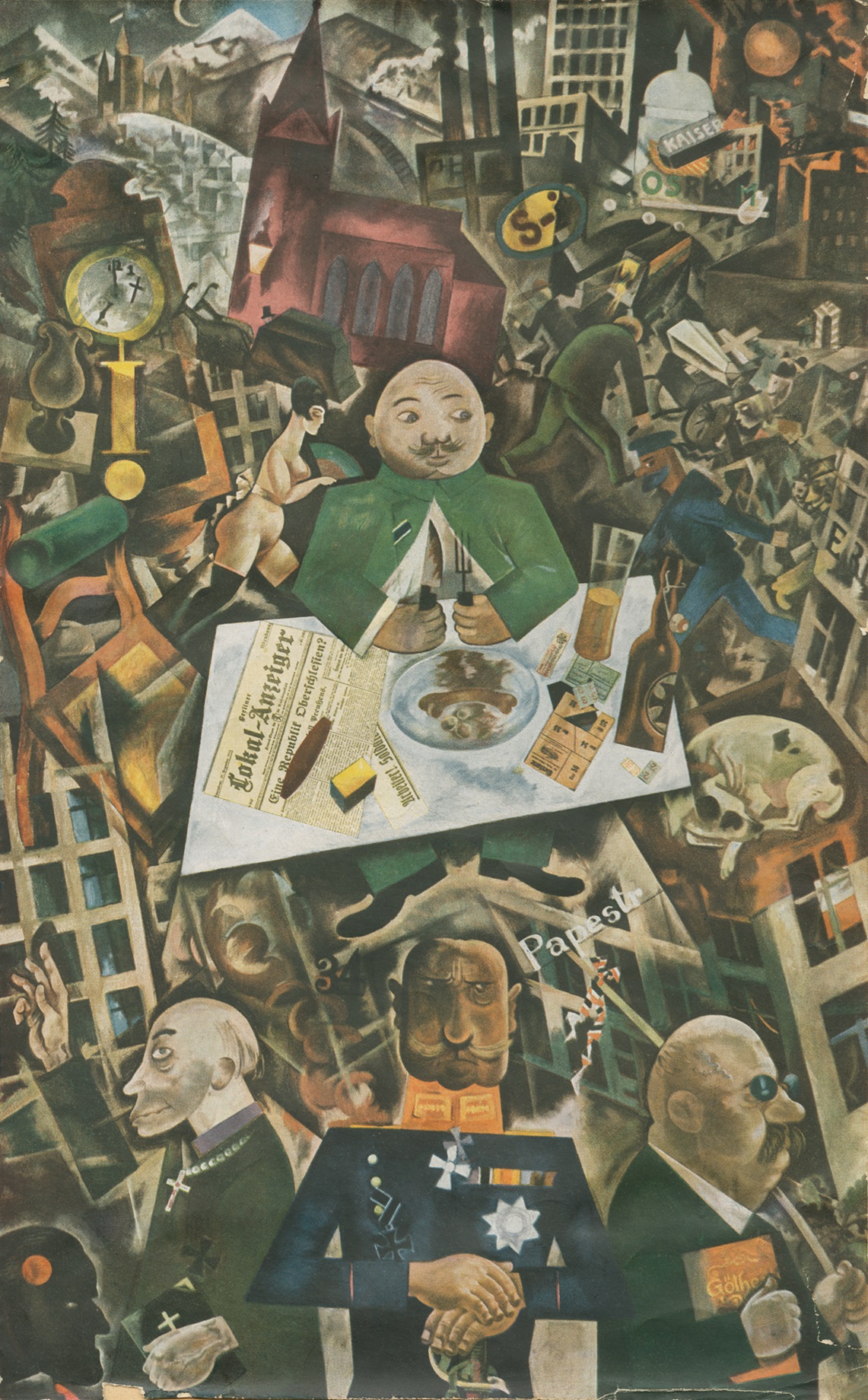
“DADA war Ausbruch einer Revolte von Lebensfreude und Wut, war das Resultat der Absurdität, der großen Schweinerei dieses blödsinnigen Krieges. Wir jungen Leute kamen wie betäubt aus dem Krieg zurück und unsere Empörung mußte sich irgendwie Luft machen. Das geschah ganz natürlich mit Angriffen auf die Grundlagen der Zivilisation, die diesen Krieg herbeigeführt hatte.”

aus: Max Ernst in der Fernsehdokumentation “Kunst authentisch”, Carl Lamb und Peter Schamoni, WDR 1964, zitiert in der Ausstellung “DADA, Sperren Sie endlich Ihren Kopf auf!”, Zentrum für verfolgte Künste Solingen, 2026.

Abb.: George Grosz: Deutschland, ein Wintermärchen 1919.

07/26

25/07/2026 (23:13) Schlagworte: DE,Lesebuch ::